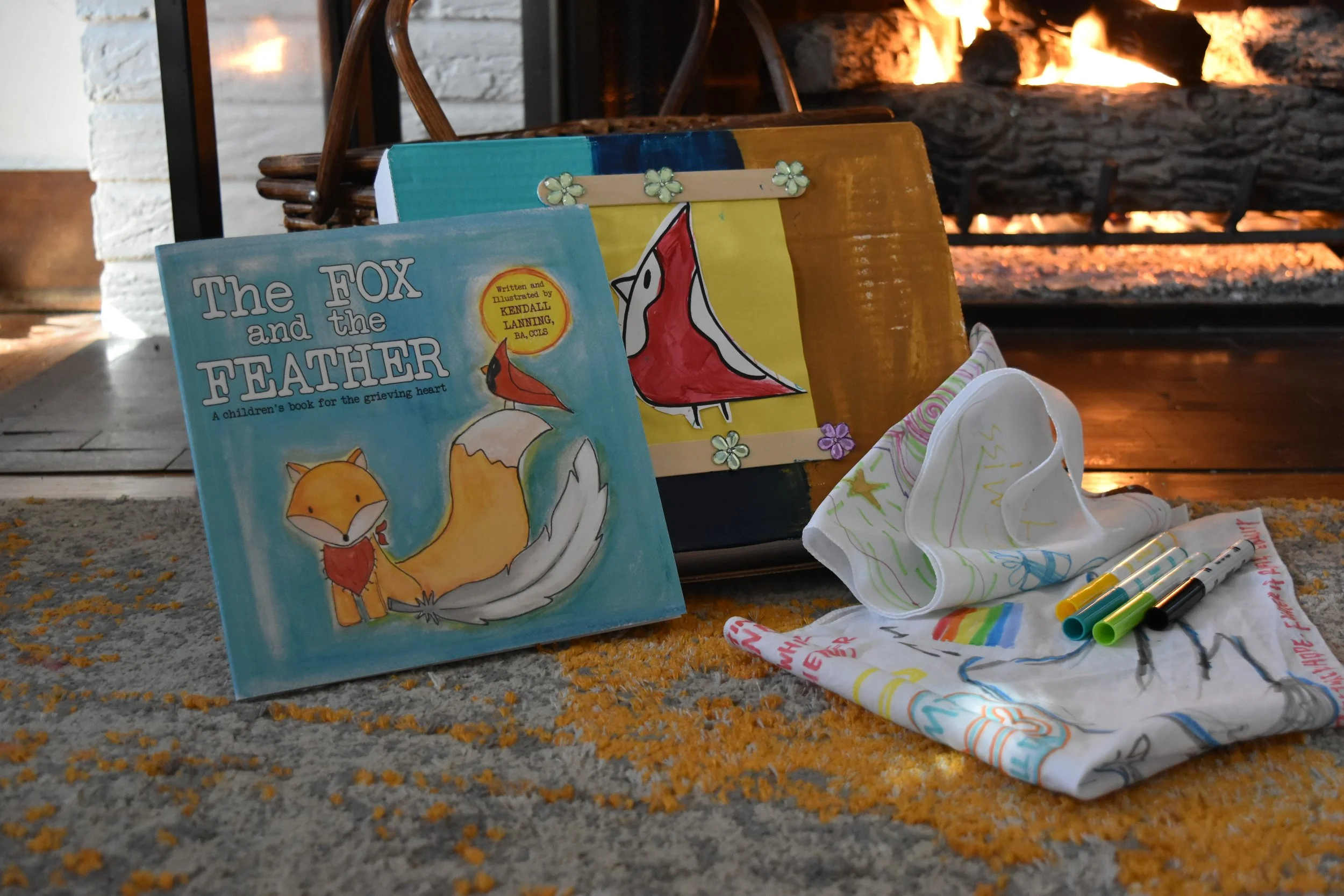

The Fox & the Feather
Grief Book & Activities for Children and Families
Author/Illustrator
Kendall Lanning, BA, CCLS


The Fox and Cardinal are best friends. One day the Cardinal explains that he, “is sick and dying,” but reminds the Fox to look for signs to remind him they will always be together. One of those signs is a feather.
This book gives hope to the grieving heart and can also help open conversations on death, grief, and loss. Although, someone’s body is not with us, we can still get signs and messages they are near. Assisting in spiritual and emotional intelligence which aids their coping.
Grief can be a difficult topic to talk about with children. We try our best to protect our children from pain, and many times grief is associated with deep emotional pain. Keeping children safe from these experiences is natural response, but by blocking these conversations they are left to make up their own stories or not have proper tools to navigate through difficult emotions.
Validating feelings, answering questions, using developmentally appropriate language, clearing up misconceptions and giving them choices are essential in the process of talking to your child about grief and death.
Everyone Grieves Differently.
Children perceive death differently depending on their developmental stage and their concepts of death. It is important to tune into the individual needs of each child, providing a safe and supportive space for them to express their feelings. Be honest with children and use concrete language and developmentally appropriate language. What is not told to them gives them room to make up their own stories about the situations regarding death. The healing process for grief is ongoing and unpredictable. When grieving and/or holding space for someone that is grieving, it is important to remember self-care to assist in nourishing your heart.
Be prepared to answer questions and be TRUTHFUL AND HONEST
Give children choices
Validate feelings and encourage putting emotions into words
Engage in memory making and memory discussions
Remain available
Allow children to play, talk and recreate
Maintain routine as much as possible
Reach out to local support groups
Seek professional help
Use concrete words such as “death or died” instead of “pass away”